iPod Anniversary: A quarter-century of pocket music
Twenty-five years after its 2001 debut, the original iPod remains a landmark in consumer electronics for storing 1,000 songs in a card-sized device.
By Jasmine Coleman ·
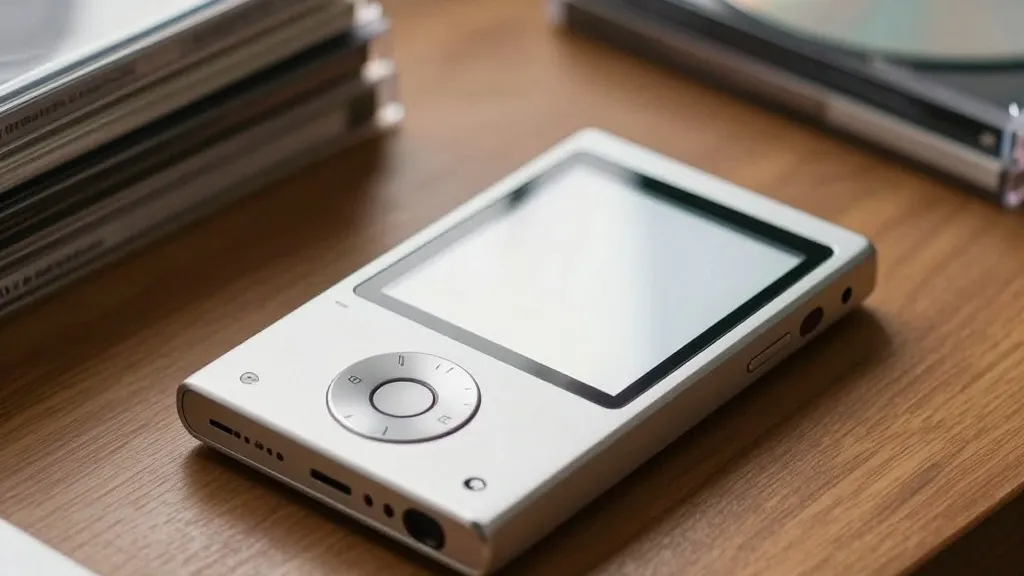
Twenty-five years ago today, Apple CEO Steve Jobs unveiled the original iPod, introducing a pocket-sized digital music player that would define a generation of portable audio. The device, priced at $399, promised to fit a user's entire music library into a package the size of a deck of cards. This launch marked a significant pivot for the Cupertino-based company, which had just guided Apple out of a difficult post-dot-com bubble period with the success of the iMac and iBook lines.
The hardware specifications were modest by modern standards but revolutionary for the time. The player featured a 5-gigabyte hard drive, sufficient to hold approximately 1,000 songs. Specifically, this capacity accommodated 1,000 typical pop songs encoded as MP3s at a 160Kbps bitrate. The device measured 2.4 by 4 by 0.78 inches and weighed 6.5 ounces, making it lighter than most cell phones available in 2001. Its compactness was enabled by a 1.8-inch hard drive from Toshiba, which was only 0.2 inches thick.
Jobs positioned the iPod as the center of a broader digital lifestyle, arguing that the Mac would act as a hub for various devices, including cameras and DVD players. He noted that while competitors like Sony, Creative, and Sonic Blue already offered portable players, none had found the right formula for digital music. At the time of the announcement, the market included CD players, MP3 CD players, flash players, and hard-disk-based jukebox players. Apple selected the hard-disk approach as the optimal entry point, citing the universal appeal of music as a massive target market without a dominant leader.
The device supported popular audio formats of the era, including MP3, WAV, and AIFF, delivering CD-quality sound. A key differentiator was the inclusion of FireWire 400 connectivity, which Apple billed as the first and only music player to feature it. This connection allowed for rapid data transfer; Jobs claimed an entire CD of music could be transferred to the device in five to 10 seconds. In contrast, USB connections of the same period required approximately five minutes for the same task. Filling the entire 5-gigabyte drive was estimated to take 10 minutes via FireWire, compared to five hours for a USB-based player.
Power management was also a focal point of the presentation. The iPod utilized a rechargeable lithium-polymer battery that provided 10 hours of continuous playback. Apple stated that an empty battery could be recharged to 80 percent capacity in just one hour. The device also included features such as 20-minute skip protection and fast file transfer capabilities, reinforcing its utility for on-the-go listening.
The user interface was designed for single-hand operation, featuring an accelerated scroll wheel with a piezoelectric clicker for tactile feedback. This design allowed users to quickly locate and play music by playlist, artist, or song. During the unveiling, Jobs demonstrated the device by playing the song 'Building a Mystery' by Sarah MacLachlan. The minimalist design of the back and sides was highlighted as a key aesthetic advantage, emphasizing durability and Apple's traditional ease of use.
The launch was synchronized with the release of iTunes 2, which introduced advanced features such as MP3 CD burning and syncing support. The Auto-Sync feature ensured that libraries curated on a Mac were automatically mirrored to the pocket player during charging or data transfer. The iPod also functioned as a FireWire hard disk drive, adding versatility to its primary role as a music player.
The original iPhone did not arrive until early 2007, more than five years after the iPod's debut. The two devices coexisted in Apple's product lineup for over a decade. The iPod line eventually faded as smartphones matured, with the final model, the 7th-generation iPod Touch, released in May 2019. Although the product line was left unmaintained for a time, it was officially discontinued in May 2022, closing the chapter on a device that had fundamentally changed how people consumed music.
Source: Tom's Hardware