Warhound Launches with $200 Million to Clone Genetically Enhanced Military Dogs
Backed by Colossal Biosciences and Anduril, the new venture aims to solve the U.S. military's working dog shortage by creating healthier, longer-lived canines equipped with advanced tech gear.
By Ivan Petrov ·
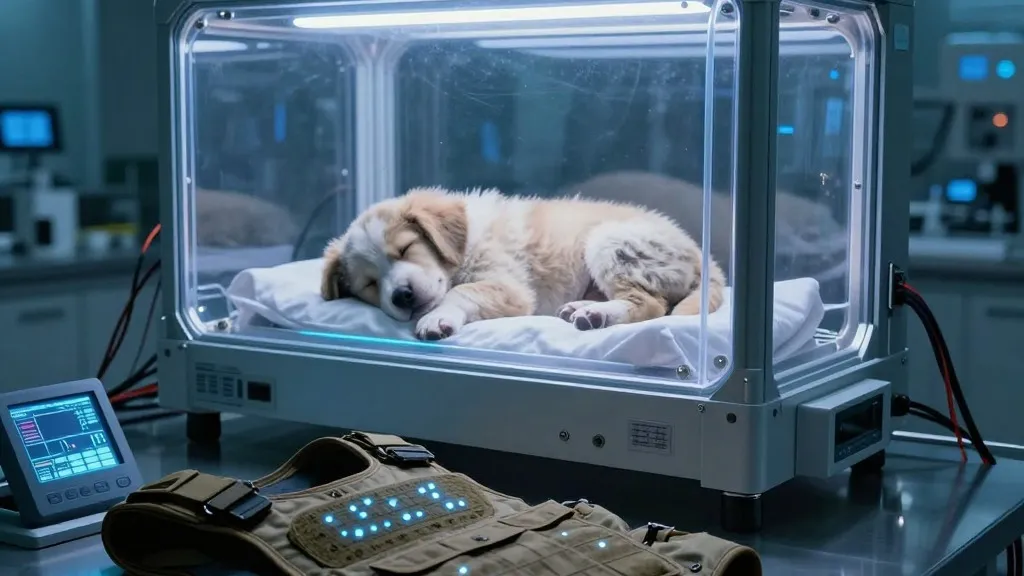
The United States military’s reliance on foreign-bred working dogs has long been a logistical vulnerability, with over 80% of these animals sourced from Europe and fewer than half deemed fit for service. This week, a new venture called Warhound emerged from stealth mode with a solution: a $200 million funding round to genetically engineer dogs specifically for high-stakes operations.
The company, which values itself at $1.2 billion, is backed by prominent investors including Sequoia, 8VC, Corner Ventures, and In-Q-Tel, a venture firm supported by the CIA and other U.S. intelligence agencies. Warhound is a collaboration between Ben Lamm, co-founder of Colossal Biosciences, and Palmer Luckey, the founder of Anduril. While Luckey serves as a partner in the venture, he holds no equity, whereas Colossal owns a stake and licenses its technology to the new entity.
The primary mission of Warhound is to address the dwindling supply of healthy working dogs. Lamm noted that many traditional breeds, such as Belgian Malinois and German Shepherds, often fail training due to inherited issues like poor eyesight, hip dysplasia, or cancer predispositions. By studying cell lines from top-performing breeds and storing them in a biobank, the team intends to edit genes to remove detrimental traits and add those that enhance speed, agility, longevity, and olfactory sensitivity.
These engineered dogs are not yet in existence, but the first batch is currently being cloned and incubated. Births are expected early next year, with the goal of having the animals in service within two years. Viagen, another company owned by Colossal, will handle the cloning process, leveraging a technology that boasts a high success rate and is already used in programs to protect endangered species.
Beyond genetics, the dogs will be equipped with hardware and software from Anduril. This includes protective vests and goggles designed to provide situational awareness for both the animal and its handler. Lamm described the concept as adding capabilities "on top of the dog, not in the dog," such as vests with data sensors that relay real-time information to handlers, thereby improving coordination and safety during dangerous missions.
The venture plans to sell these dogs to the Department of Defense, military service groups, police forces, and other first responders, though pricing has not yet been determined. Lamm stated that the company has briefed numerous government groups on the business and expects the dogs to be managed by their buyers just like any other military working dog. The enhancements are designed to make the dogs safer and more effective, which in turn better protects their human handlers.
To address concerns regarding animal welfare, Warhound is working under the guidance of the American Humane Society to certify its training program. The society aims to ensure that the animals are treated humanely throughout their service and that retired dogs are placed through its Military Working Dog Reunification Program or other support initiatives.
In a statement, the American Humane Society praised the collaboration, noting that it invited the "country’s first national humane organization, which is grounded in science and ethics, to have a seat at the table." The organization expressed its anticipation of working with Warhound and Colossal to ensure the well-being of the animals in their care.
Colossal Biosciences, known for its de-extinction efforts to revive animals like the mammoth and dodo, is providing the scientific foundation for this project. The company has been utilizing AI to assist in gene cloning and the identification of animal genes, a capability that is now being applied to create a new type of canine designed for demanding military and law enforcement roles.
Source: TechCrunch